One attic. Two answers. You will always see the road not taken.
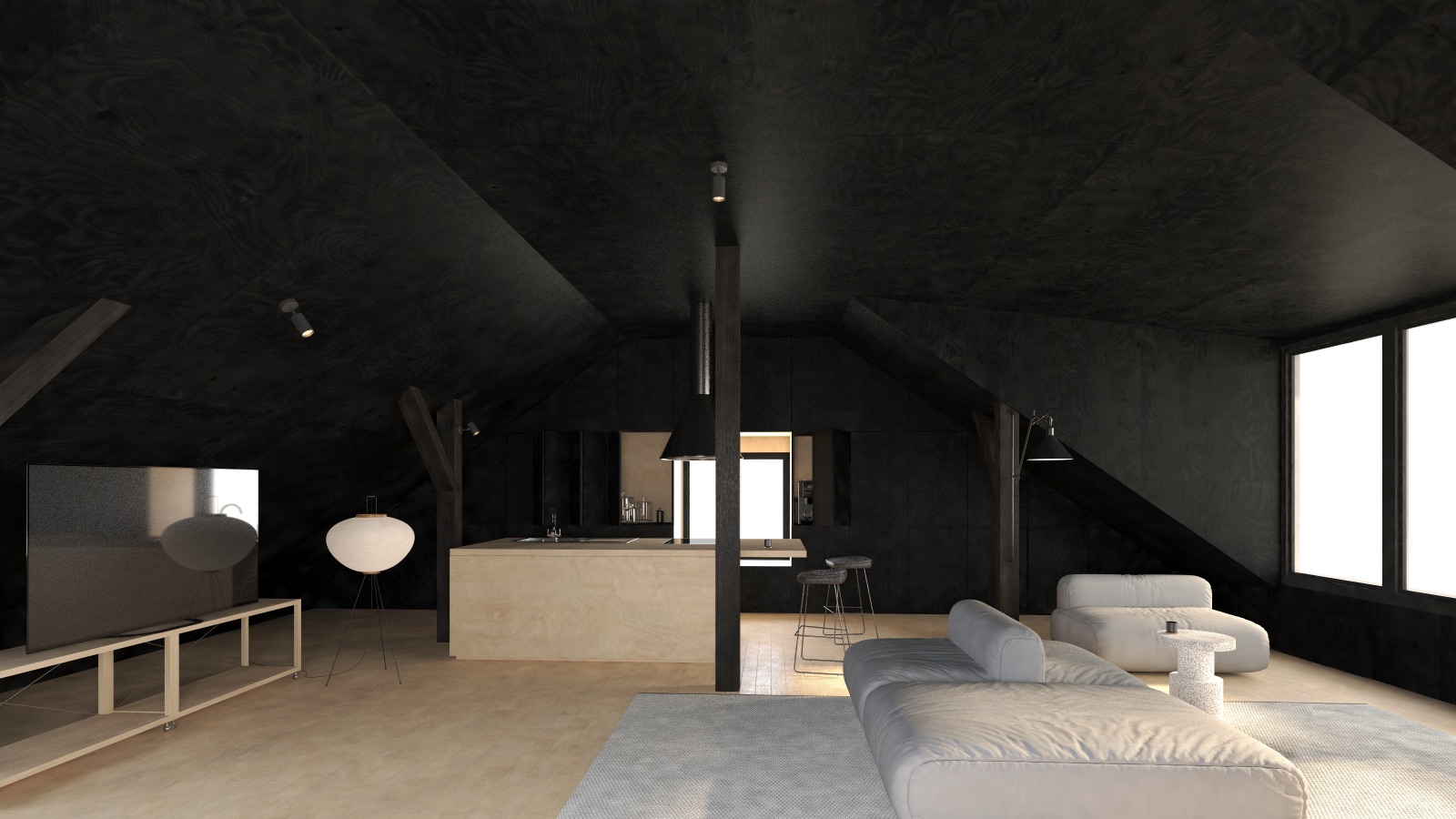
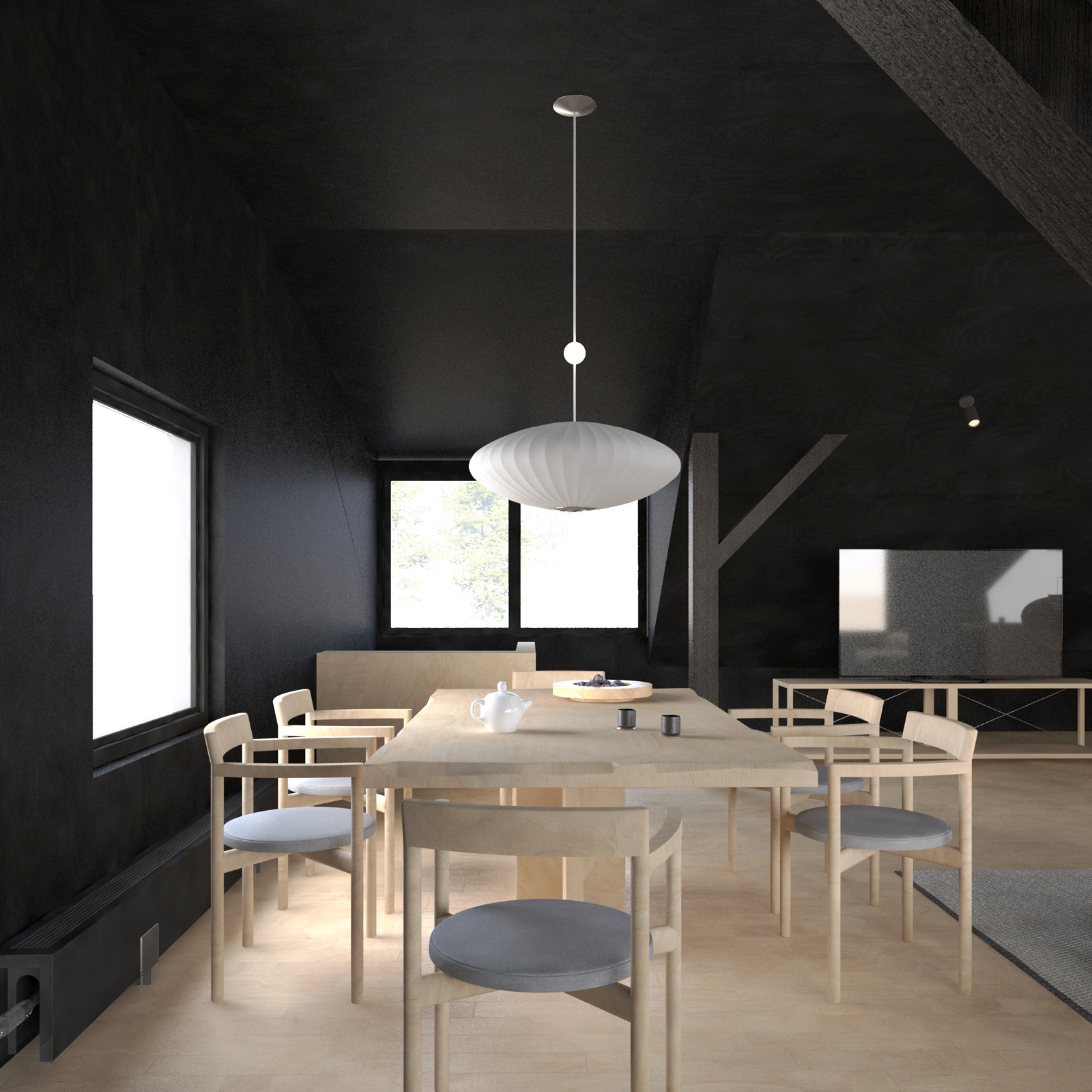
For one attic flat, we drew two honest schemes. A pale one: white walls, oak floor, the roof timbers left visible, the window doing the talking. And this one — the same rooms lined in dark timber, the light hoarded into one glowing island, the roof pulled close like a coat.
We loved the dark one. We still do. The family sat with both, asked us everything — cost, light in November, what it means to repaint — and chose the pale one. They were right, because it was never our flat. You can see what they built on our front page; it is a good home, and it is unmistakably theirs.
This page exists because of what that choice proves. When a studio shows you one design, you are not deciding — you are approving. We put real alternatives on the table, price the difference, argue honestly for our favourite, and then lose gracefully. The flat belongs to the person who has to live in it.
What this means for your flat
At concept stage you see genuinely different answers to your brief — not one design and a shrug. Each comes with its cost and its consequences spelled out.
We will tell you plainly which scheme we would build — and then we build the one that fits the people, the budget and the mornings that actually happen in your home.
Every fork in the road comes with its price attached, in English, before you choose. Deciding between two knowns is a pleasure. Signing one unknown is a gamble.
When you choose the scheme we argued against, we build it as if it had been our idea. Half-hearted execution of the client's choice is the industry's oldest bad habit. Not ours.
Thirty minutes in English about your flat, no pitch. If it becomes a project, you will meet at least two versions of your own home — and the choice will be entirely yours.